Hola a todos, como habéis visto no os he puesto nada con el fin de semana tan largo que tenemos. Esto es porque tengo la esperanza de que termiéis lo que tenemos pendiente...
Los horarios y la distribución queda de la siguiente manera:
Lunes-Miércoles-Viernes 17-19
Debora
Miguel Ángel
Quique
Sergio
Martes-Jueves-Sábados 17-19
Desiree
Rubén
Fernando

Look and complete with AM, IS, ARE, HAVE or HAS
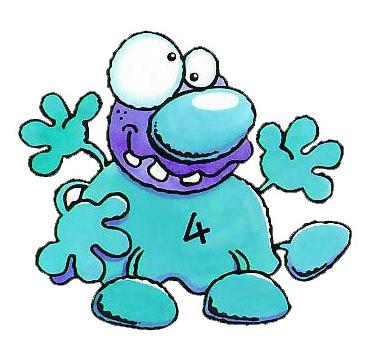
Hi! I Pow.
I 103 years old.
I got three hands and three legs.
My nose very big.
I got two eyes.
One eye small and the other big.
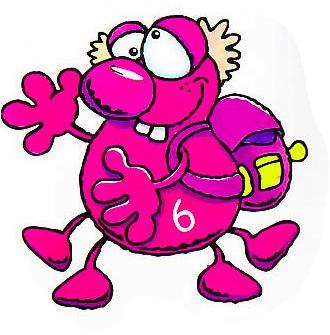
They my best friends: Fify and Mud.
Fify 102 years old.
She pink and pretty.
She got two hands and four legs.
Her nose big and she got two eyes
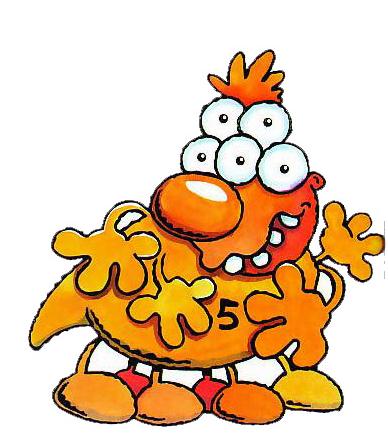
Mud 104 years old.
He orange and funny.
He got six legs and four arms.
His nose very big and he got
five eyes!

Para crear oraciones utilizamos pronombres personales, sustantivos, adjetivos, verbos, conjunciones, preposiciones, etc...
Vuestra tarea será buscar todos los pronombres, sustantivos, adjetivos, etc... que conozcáis, nombrando su significado, las clases (adjetivo calificativo, adjetivo posesivo, sustantivo propio/común, etc...) y poniendo un ejemplo de casa uno.
Todo esto es en expañol.
(Donde he puesto ETC... significa que hay más, es decir, que no debéis ceñiros a lo que he puesto).
Vuestra tarea será buscar todos los pronombres, sustantivos, adjetivos, etc... que conozcáis, nombrando su significado, las clases (adjetivo calificativo, adjetivo posesivo, sustantivo propio/común, etc...) y poniendo un ejemplo de casa uno.
Todo esto es en expañol.
(Donde he puesto ETC... significa que hay más, es decir, que no debéis ceñiros a lo que he puesto).
Language structure
These are the basic units of the language, from the simplest to the most complex:
1. Phoneme: /d/ /k/ /l/
a phoneme es a distinctive speech sound. Phonemes are represented by phonetic transcription.
2. The syllable: en inglés al igual que espeñol las sílabas son conjuntos de sonidos. Ejem: casa- /ka/ /sa/ dos sílabas mice /mais/ una silaba.
A syllable es made up of one or more phonemes.
3. the word: daughter, cat, mouse...
A word is considered the smallest unit of the languaje capable of carrying a meaning. It can be made up of one or more syllables.
4. The phrase: an old sport cars, In the park...
A phrase in made uo of two or more words which together make up a particular element -the subject or the object - of the clause. Phrases can be classified into:
*Noun phrases (they function as subject or object)
*Verb phrases
*Adverb phrases
5. The clause: The old man was on television (main clause), The old man whose son died in the accident(subordinate clause).
A clause is a group of words which contains a subject and a finite verb, and it may also contain an object or an adverb. The three types of clauses are:
*Main clause: it provides a complete expression of meaning and can stand independently.
*Subordinate clause: it cannot stand independently and is dependent on a main clause. It is
usually introduced by a conjunction.
*Coordinate clause: it is one of two clauses which could each stand as independent sentence and are
joined together, ususally linkend by and, but or or.
6. The sentence: The old man whose son died in the accident was on television.
A sentence provides a complete expression of meaning. It is made up of one or more clauses. It can express a statement, a question, a command or an exclamation. If the sentence is an imperative, it may not have a subject. In case of an exclamation it may not have a verb.
Homework:
* Copiar en la libreta y traducir.
* Buscar 5 ejemplos de cada uno de los seis puntos.
* Read these sentences and identify phonemes, syllables, words, phrases and clauses. (y poner de qué tipos son casa una).
-We bought the sofa because it was cheap.
- As we drove past the park, we saw some people lying on the grass.
- Whrn he fell over, he broke two of his teeth.
- We've got some flour, but we haven't got any sugar.
- We packed our suitcases and left in a hurry.
* Make your own sentences and mark the phonemes, syllables, words, phrases and clauses. (y poner de qué tipos son casa una).
*
These are the basic units of the language, from the simplest to the most complex:
1. Phoneme: /d/ /k/ /l/
a phoneme es a distinctive speech sound. Phonemes are represented by phonetic transcription.
2. The syllable: en inglés al igual que espeñol las sílabas son conjuntos de sonidos. Ejem: casa- /ka/ /sa/ dos sílabas mice /mais/ una silaba.
A syllable es made up of one or more phonemes.
3. the word: daughter, cat, mouse...
A word is considered the smallest unit of the languaje capable of carrying a meaning. It can be made up of one or more syllables.
4. The phrase: an old sport cars, In the park...
A phrase in made uo of two or more words which together make up a particular element -the subject or the object - of the clause. Phrases can be classified into:
*Noun phrases (they function as subject or object)
*Verb phrases
*Adverb phrases
5. The clause: The old man was on television (main clause), The old man whose son died in the accident(subordinate clause).
A clause is a group of words which contains a subject and a finite verb, and it may also contain an object or an adverb. The three types of clauses are:
*Main clause: it provides a complete expression of meaning and can stand independently.
*Subordinate clause: it cannot stand independently and is dependent on a main clause. It is
usually introduced by a conjunction.
*Coordinate clause: it is one of two clauses which could each stand as independent sentence and are
joined together, ususally linkend by and, but or or.
6. The sentence: The old man whose son died in the accident was on television.
A sentence provides a complete expression of meaning. It is made up of one or more clauses. It can express a statement, a question, a command or an exclamation. If the sentence is an imperative, it may not have a subject. In case of an exclamation it may not have a verb.
Homework:
* Copiar en la libreta y traducir.
* Buscar 5 ejemplos de cada uno de los seis puntos.
* Read these sentences and identify phonemes, syllables, words, phrases and clauses. (y poner de qué tipos son casa una).
-We bought the sofa because it was cheap.
- As we drove past the park, we saw some people lying on the grass.
- Whrn he fell over, he broke two of his teeth.
- We've got some flour, but we haven't got any sugar.
- We packed our suitcases and left in a hurry.
* Make your own sentences and mark the phonemes, syllables, words, phrases and clauses. (y poner de qué tipos son casa una).
*
Presente simple
S + V +
C
S + Aux + not + V + C
Aux + S + V + C ?
I am
tall
I am not tall
Are you tall?
I live in
Valencia
I do not live in Valencia
Do you live in Valencia?
Presente continuo
S + Verbo To Be + Ving + C S + Verbo To Be + not +Ving + C Verbo To Be + S + Ving + C?
I am playing football
I am not playing football Are you playing football?
Pasado simple
S + V(ed regular/2º columna irregular) +
C
S + Aux + not + V + C
Aux + S + V + C ?
I was tall
I was not tall were you tall?
I lived in
Valencia
I did not live in Valencia
Did you live in Valencia?
Pasado continuo
S + Verbo To Be + Ving + C S + Verbo To Be + not +Ving + C Verbo To Be + S + Ving + C?
I was playing football
I was not playing football Were you playing football?
Conjugación verbo To Be:
| Infinitivo: | be |
| Gerundio (Present Participle): | being |
| Participio pasado (Past participle): | been |
| Persona,Número | Presente | Pasado | |
| 1a,singular | I | am | was |
| 2a,singular | you | are | were |
| 3a,singular | he/she/it | is | was |
| 1a,plural | we | are | were |
| 2a,plural | you | are | were |
| 3a,plural | they | are | were |
Conjugación verbo To Play:
| Infinitive | play |
| Past | played |
| Present Participle | playing |
| Past Participle | played |
| Present: | |
| I | play |
| You | play |
| He, She, It | plays |
| We | play |
| You | play |
| They | play |
Conjugación verbo To Swim:
| Infinitive | swim |
| Past | swam |
| Present Participle | swimming |
| Past Participle | swum |
| Present: | |
| I | swim |
| You | swim |
| He, She, It | swims |
| We | swim |
| You | swim |
| They | swim |
Después de un merecido descanso a los que habéis aprobado en Septiembre volvemos ha empezar el curso escolar. Este año hay novedades, ya que, las clases las he dividido en dos turnos, éstos se elegirán por orden de llegada, sin poder resevarse ninguno:
Lunes-Miércoles-Viernes de 17:15 a 19:15.
Martes-Jueves de 17:15 a 19: 15 Sábados de 10 a 12.
Las clases comenzán el sábado día 1 de Septiembre.
Un saludo.
Lunes-Miércoles-Viernes de 17:15 a 19:15.
Martes-Jueves de 17:15 a 19: 15 Sábados de 10 a 12.
Las clases comenzán el sábado día 1 de Septiembre.
Un saludo.
Tiene toda la tarea apuntada en la libreta, pero a parte tiene que hacer unos ejercicios sobre el m.c.m y m.c d. porque ya no se acuerda.
Tiene clase el lunes de 10-13.
ejercicios de m.c.m y m.c d
Tiene clase el lunes de 10-13.
ejercicios de m.c.m y m.c d
Suscribirse a:
Entradas (Atom)


- Follow Us on Twitter!
- "Join Us on Facebook!
- RSS
Contact